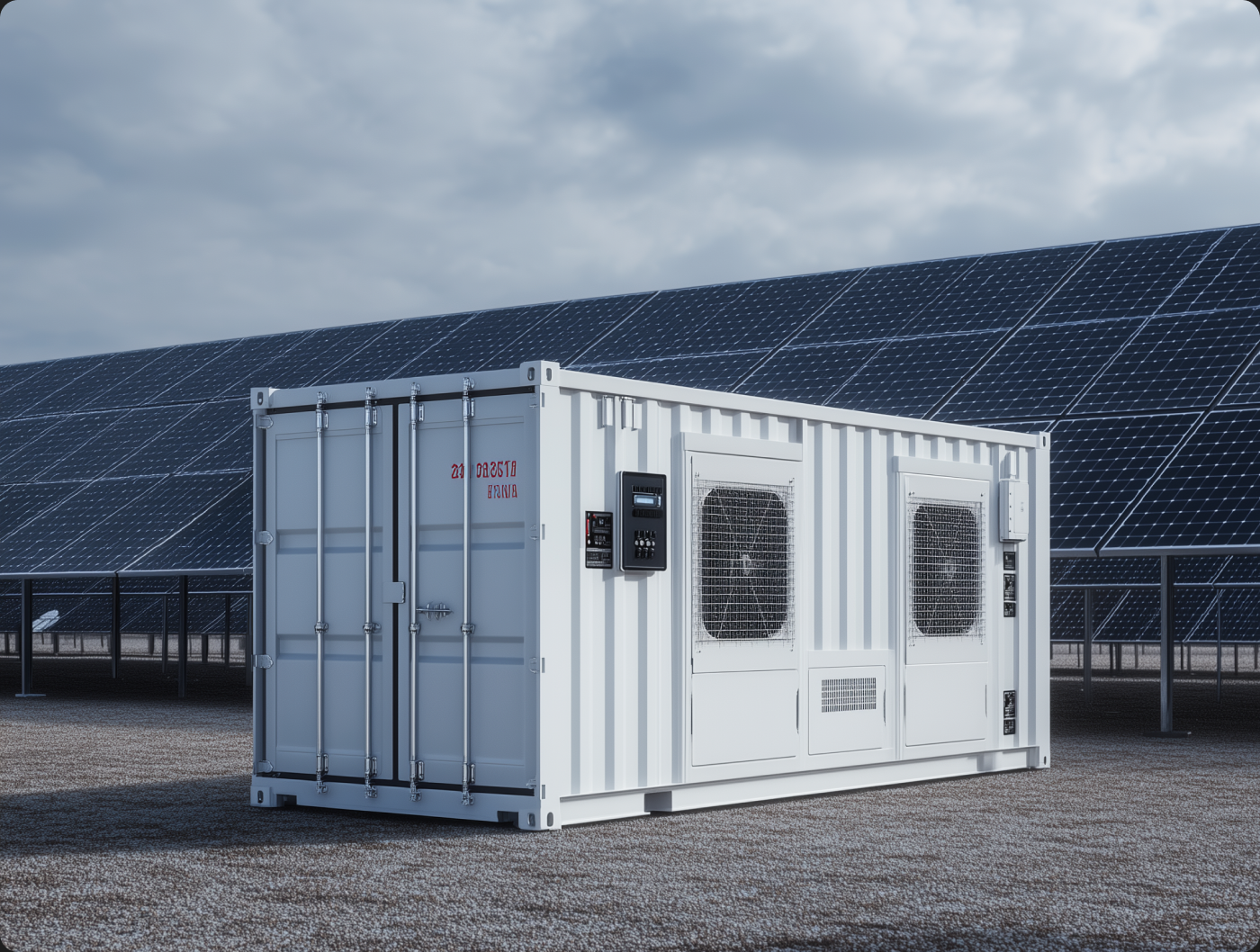
Every container becomes a continuously monitored asset whose availability, usable energy, and rate of aging are actively managed rather than discovered after the fact. Three proofs show what that is worth.
Proof 1: recovering capacity the asset already paid for
Over 80% of new BESS builds carry SoC error margins of 10 to 20%, and on a flat LFP curve that error only grows. The consequence is capacity that physically exists but never gets dispatched, because the energy management system is trading against a wrong number, and in some documented cases that has stranded more than a tenth of a site's capacity outright. FawkesCore detects and corrects SoC drift to within roughly ±1.5% and opens over-conservative operating windows using degradation-aware limits rather than blanket ones. On a 250 MWh portfolio, tightening drift and unlocking even a few percent of stranded capacity is not a rounding error. At ₹54 lakh per 1% of availability, it is among the largest single levers in the entire business case.
Proof 2: catching failures before they cascade
Battery failures split into two classes, and both are addressable before they cost anything. Major thermal events are rare but ruinous, and the field data is unambiguous that their electrical and thermal precursors are detectable roughly a day ahead and, in most cases, a week ahead. Minor faults, the rack trips and cooling and communication failures, are the opposite: individually trivial, collectively a steady 1 to 3% drain on availability that most operators never quantify. FawkesCore surfaces both from precursor signatures, flagging the minor faults that erode availability quietly and the thermal ones that threaten the site, so intervention happens on Fawkes's timeline instead of the failure's. Given what a single container-level event does to a site (direct loss plus months of partial downtime), moving detection ahead of the event is the difference between a scheduled fix and an emergency.
Proof 3: slowing the aging the operator never chose
Two batteries at the same 90% State of Health can have very different life left, and the difference is operation management, not chemistry. High resting SoC, high-temperature dwell, deep discharge, and high C-rate all accelerate fade. Cycling less and shrinking depth of discharge, hands back revenue. However the real unlock is degradation-aware dispatch strategy: shaping resting SoC, thermal setpoints, and cycle timing so fade slows without cutting billable throughput. FawkesCore identifies the abusive operating windows, the thermal imbalance, and the excessive high-SoC storage that quietly age the pack, then guides operation away from them. This reduces unnecessary aging, which is well established in battery literature, and on a portfolio this size even a small reduction preserves meaningful asset life and the revenue that life represents.
What the value case looks like
Fawkes modeled these drivers, along with deferred augmentation, reduced O&M, warranty recovery, and stronger insurance and lender terms, across an eight-year horizon. On conservative assumptions the recurring value lands around ₹8 crore a year, and on the upside nearer ₹19 crore, against a FawkesCore subscription of roughly ₹0.5 crore a year. That is a modeled 14x to 33x return. These figures are projections grounded in industry benchmarks and the portfolio's own unit economics rather than measured outcomes, and the program is designed to put them to the test on live assets.
Why it matters
The global BESS industry has learned this lesson expensively. Independent evaluations have found real-world round-trip efficiency running well below expectations, cell imbalance capping usable energy below nameplate, and root causes that stay hidden for want of independent data. The pattern is consistent: relying on vendor dashboards alone leaves the owner blind to the losses that matter most, and for a utility brand the downside is not only asset value but trust, insurance standing, and the approvals that future projects depend on.
Looking ahead
For a single 250 MWh portfolio, an independent intelligence layer protects availability, recovers stranded capacity, and slows unnecessary aging. As India builds grid-scale storage toward national targets, that same layer becomes standard infrastructure: the neutral, continuously updated record of what every battery is actually doing, which is what operators, insurers, and lenders will increasingly require before they commit capital. Fawkes Energy is not building another dashboard. It is building the intelligence layer that lets grid-scale storage run reliably, profitably, and with its real condition finally in view.