
BESS
FawkesArc
Design-stage battery sizing & simulation platform built on physics-based degradation modelling for lifetime energy & CapEx planning
| Capability | Traditional BESS Design & Techno-Economic Tools | FawkesArc |
|---|---|---|
| Design horizon | Optimises Day 1 configuration | Optimises performance through Year 10+ |
| Battery representation | Idealised or simplified battery models | Physics-informed battery ageing models |
| Cell intelligence | Generic datasheets and vendor assumptions | Lab-calibrated, chemistry-specific cell models |
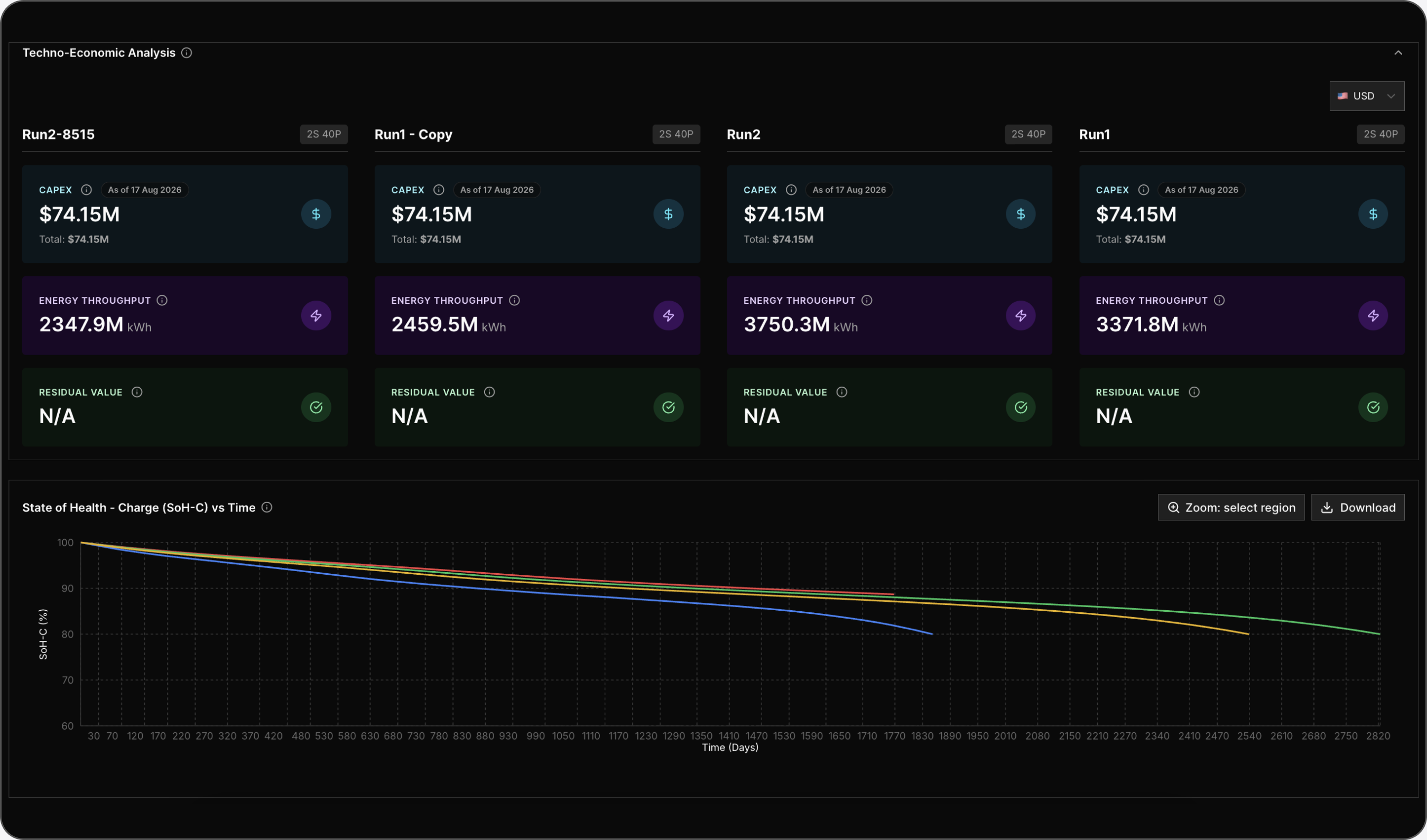
| Degradation modelling | Fixed annual degradation percentage | Predicts calendar and cycling degradation dynamically |
| Operating conditions | Standard or simplified duty cycles | Models actual dispatch, C-rate, SoC window and temperature |
| Chemistry selection | Based primarily on cost and specifications | Compares chemistry suitability under the intended application |
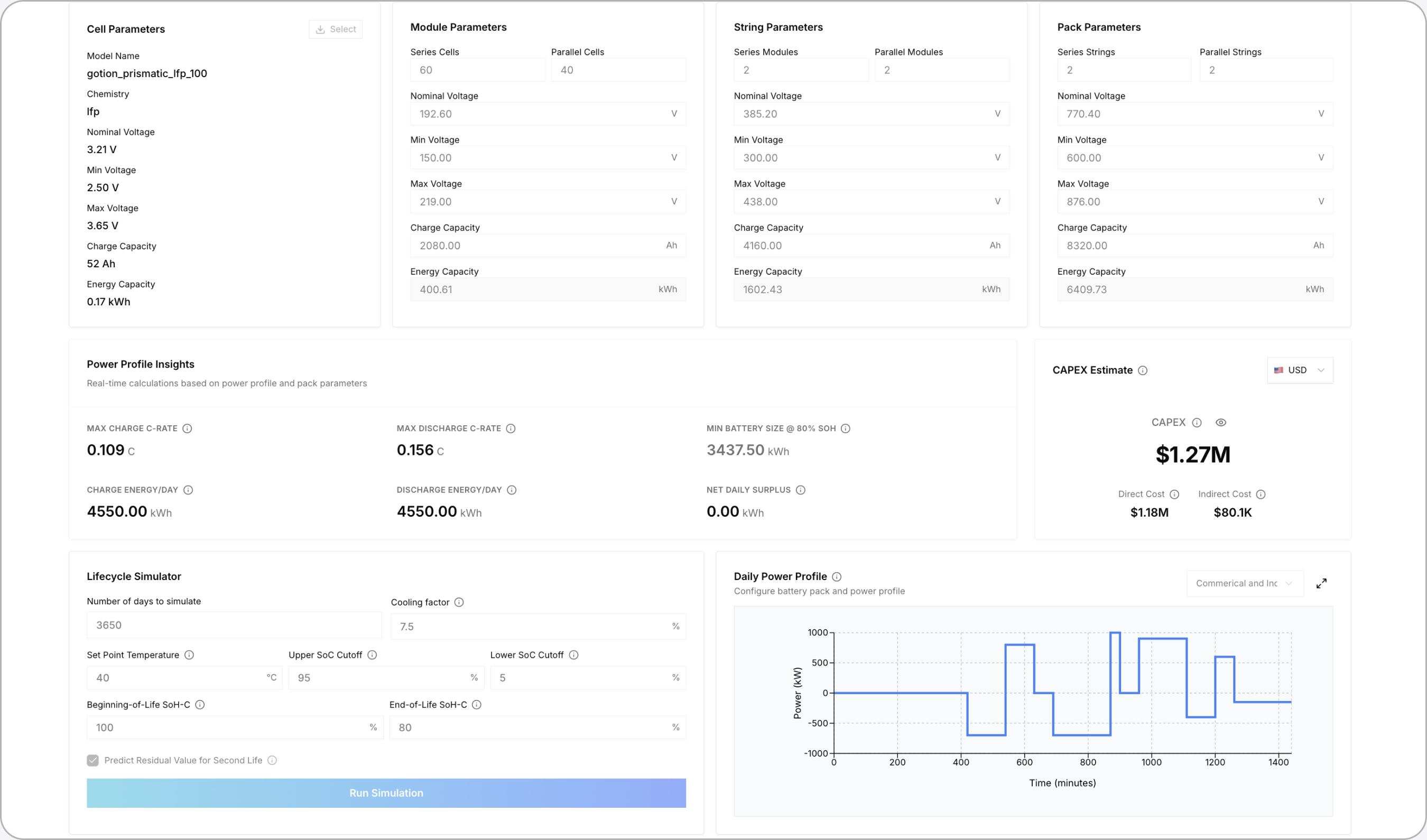
| System architecture | Sizes power and energy capacity | Compares cell, module, string and pack configurations |
| Design trade-offs | Balances CapEx, power and energy | Balances CapEx, degradation, availability and lifetime revenue |
| Techno-economics | Calculates economics using static assumptions | Links battery ageing directly to project cash flows |
| Scenario analysis | Limited, manually configured iterations | Rapid comparison across designs, chemistries and operating strategies |
| Business outcome | Engineering confidence at commissioning | Bankable confidence across the asset lifetime |
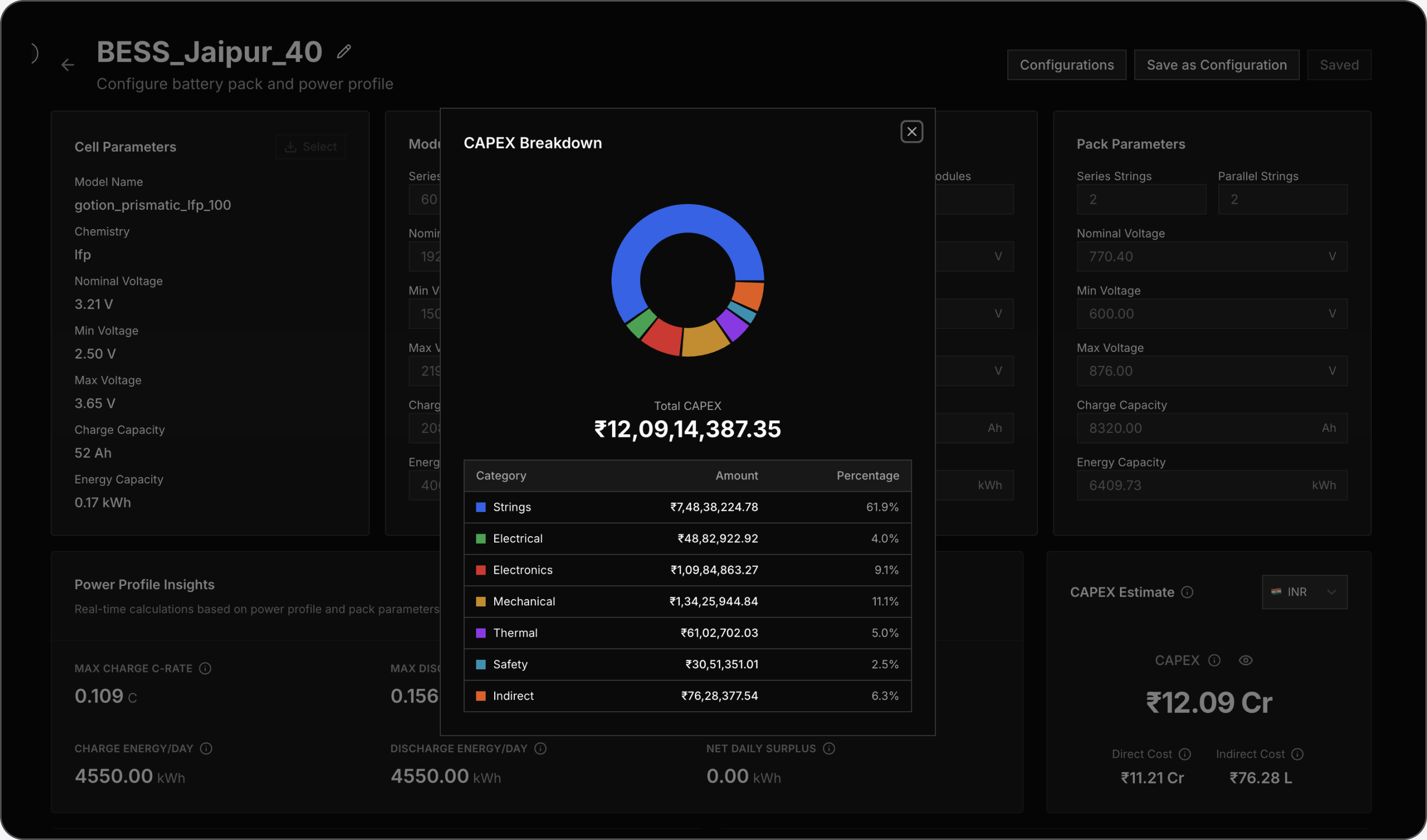
Traditional tools typically size systems around power, energy, dispatch and financial assumptions. FawkesArc brings the battery itself into the design equation - simulating how different cells, system configurations, operating profiles and environmental conditions affect degradation, usable life and lifetime economics.
FawkesArc combines real cell cycling and characterization data with physics-based and data-driven degradation models. Models are calibrated across chemistry, temperature, C-rate, depth of discharge and operating conditions to predict how a battery will age under the specific duty cycle being designed.
Yes. FawkesArc allows you to evaluate multiple cell chemistries, system configurations and operating strategies side-by-side. You can compare degradation, lifetime, usable energy and economics to identify the design that best fits the application - not simply the lowest initial CapEx.
Yes. You can select standard application profiles or upload your own power/duty-cycle data, along with operating parameters such as temperature and SoC limits. FawkesArc then simulates how the proposed system is expected to perform and degrade under those specific conditions.
FawkesArc is built for decisions made before capital gets locked into the asset: cell and chemistry selection, system sizing, operating-window selection, augmentation planning and lifecycle economics. The objective is simple — design a BESS around lifetime performance and returns, not just nameplate specifications and upfront cost.