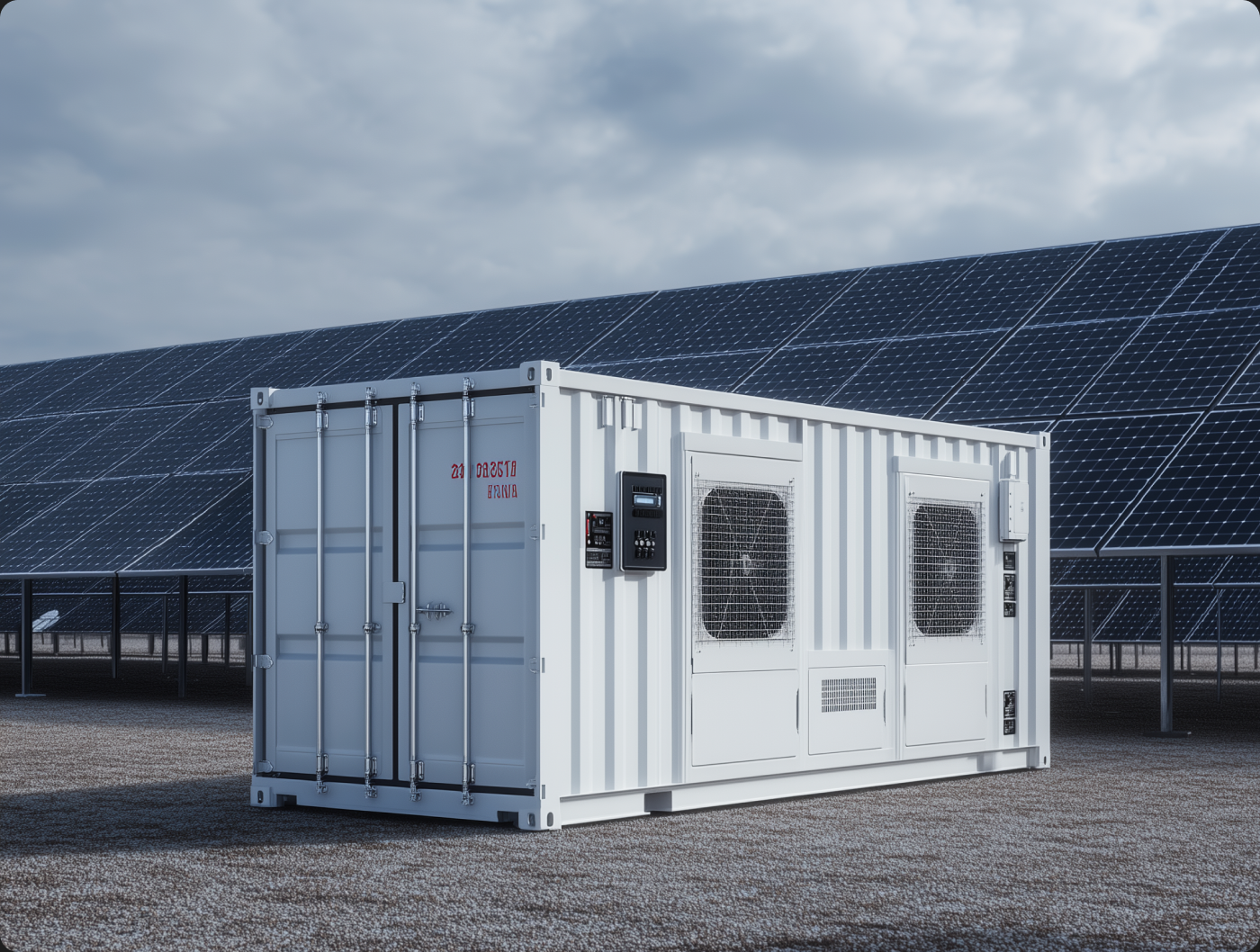
Every battery becomes a continuously monitored asset whose health, risk, and economics are actively managed rather than passively observed. Three findings from the field show what that shift is worth.
Proof 1: 30% of "battery failures" weren't the battery
Drivers reported the familiar symptoms: reduced range, poor acceleration, unexpected shutdowns. The default response was to inspect or replace the battery, because the battery is the most visible component.
By combining voltage response, current behaviour, temperature signatures, cohort comparison, and service history, FawkesCore found a large cluster of these "failed" batteries were electrochemically healthy: normal capacity retention, stable internal resistance, normal charge acceptance, no abnormal degradation. The real culprits sat elsewhere: elevated motor current demand, drivetrain inefficiencies, controller calibration, connector and contact resistance.
Roughly 30% of reported battery failures were not battery failures at all. The operator could redirect those cases to vehicle-level diagnostics instead of battery replacement, therby cutting unnecessary swaps, spare-inventory pressure, and investigation time, and pointing engineering effort at the actual root cause.
Proof 2: catching a fast-degrading cohort before it failed
Not all batteries age at the same rate. Across different vehicle platforms, duty cycles, environments, and battery generations, degradation is uneven. Historically it only became visible after failures had already piled up.
Using cohort-level analysis, FawkesCore compared batteries of similar age, mileage, charging behaviour, and environmental exposure, and flagged a specific cohort pulling away from the fleet baseline: faster resistance growth, higher operating temperatures, quicker capacity fade, growing imbalance. Conventional BMS still classified these batteries as healthy. Physics-informed degradation models showed deeper insights.
That gave the engineering team months of advance warning: time to increase monitoring, review supplier-level manufacturing variation, and prioritize inspections before the cohort turned into a wave of field failures. At fleet scale, a single cohort issue can touch thousands of assets at once; catching it early is the difference between a planned review and an emergency downtime.
Proof 3: finding the environmental stress that quietly ages batteries
Degradation is often blamed on chemistry or manufacturing. In the field, one of the largest drivers is environmental stress. It does its damage silently, long before capacity loss becomes obvious.
Analysing temperature distributions, charge behaviour, daily utilization, geography, and rest periods, FawkesCore isolated a subset of batteries under chronic thermal stress. They weren't overheating. They were simply spending long stretches at elevated temperatures during peak ambient conditions, back-to-back fast-charging sessions, and high-payload duty cycles. Without contextual analysis they looked completely normal.
That reframed the goal from replacing degraded batteries to preventing degradation in the first place through charging-policy changes, operational scheduling, and driver-behavior guidance. For a battery-subscription business, extending useful life across thousands of assets flows straight into asset ROI and residual value.
Why it matters
Taken together, the three findings mark a shift from service management to fleet reliability engineering. The operator stops reacting to whichever component shouts loudest and starts managing each battery as a measurable asset - its performance, its risk, and its lifecycle value.
The same intelligence does double duty. The cohort and stress analysis feeds procurement and R&D - quantifying how different cell chemistries, suppliers, and pack designs actually perform in the field. And the same health data underpins end-of-life decisions: which batteries are fit for resale, which for second-life stationary storage, and which for recycling. Batteries stop being depreciating assets and become managed lifecycle assets with measurable residual value.
Looking ahead
As the program scales from its pilot toward the full 20,000-asset fleet, these insights compound across operations, warranty, procurement, servicing, and second-life value. This value only grows as their operations scale to 1 lakh assets eventually.
We're not building a battery monitoring dashboard. We're building the predictive operations layer that lets electric fleets scale efficiently, reliably, and profitably. As India's electric-mobility ecosystem enters its next phase of growth, preventive maintenance and lifecycle intelligence stop being nice-to-haves and become the foundation the whole business runs on.