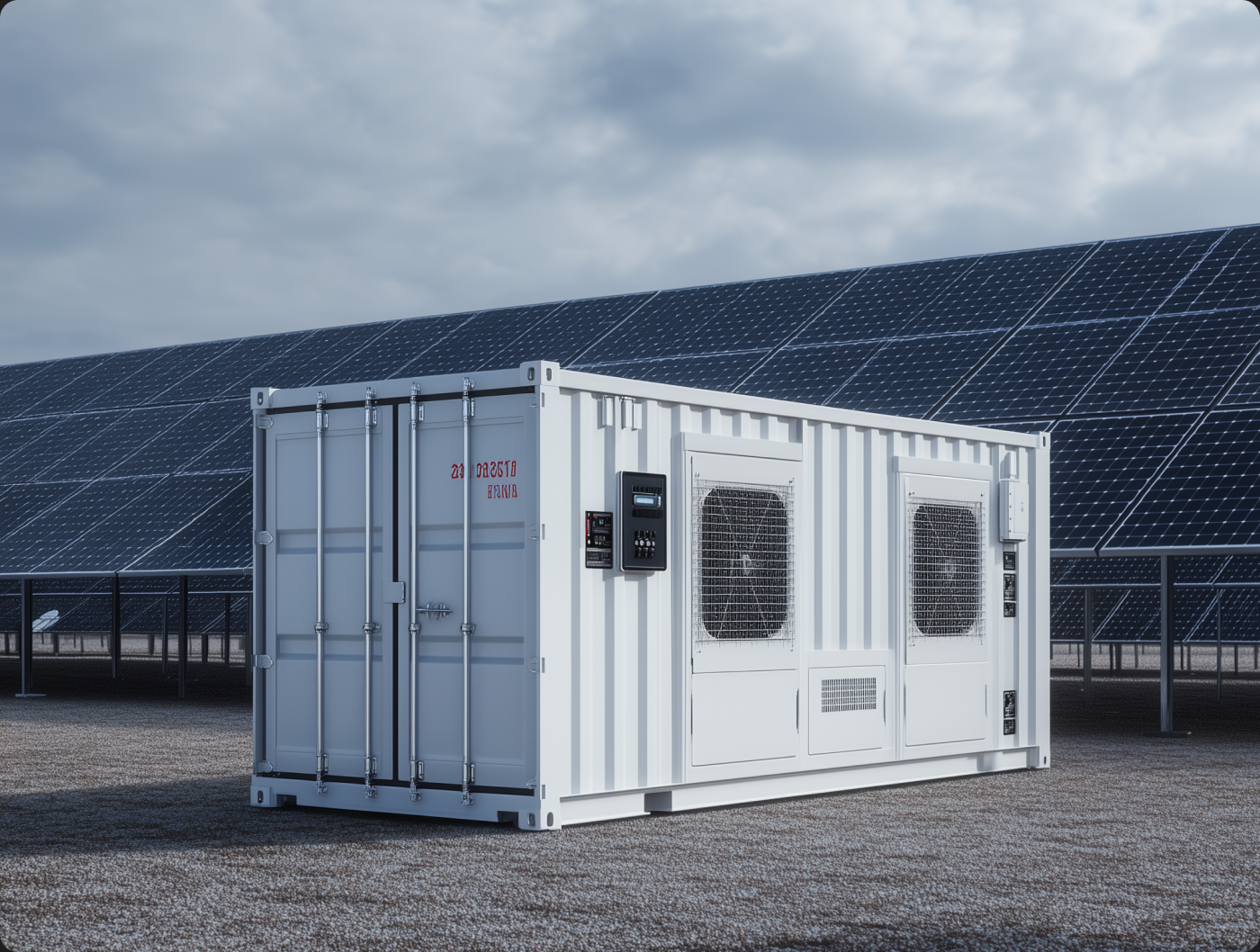
For a utility brand, the downside is not only asset loss. It is community trust, permissions, insurance, and future project approvals. It has become increasingly clear that relying on OEM and BMS analytics alone is insufficient, and that independent early-risk detection is what turns visibility into an asset-protection layer.
7 value drivers of battery intelligence for grid-scale BESS
1. Avoiding major and minor failures
Battery failures typically lead to container shutdown, rack shutdown, emergency maintenance, replacement, revenue loss, and insurance investigation.
Predictive analytics is primarily positioned around early fault detection, thermal risk identification, commissioning defects and degradation anomalies.
We split these failures into two different risk classes. Major failure modes include thermal runaway/fire, loss of one or more containers while minor modes include string/rack trips, PCS faults, BMS communication failures, cooling failures that are typically high-frequency, low-severity events that silently erode availability.
Major Failures
Modern LFP BESS sites have a 2 to 5% failure rate, resulting in a total loss of the site. A single site failure can result in crores of loss in revenue and with co-located containers at least a couple of months of partial site downtime to come back up to full system availability. This also increases deductibles, remediation and premium.
Minor Failures
Multiple events per year: high-frequency and low-severity but still causes energy availability issues amounting to as much as 1 to 3% causing recurring revenue losses of upto a few crore every year. The occurrence probability is typically between 18 and 28%
Fawkes Energy Offering
Typically, a 250 MWh BESS faces significant probable lifetime revenue and CAPEX losses over an 8-year period, driven both by major catastrophic events and by the steady drain of low-to-medium severity events. FawkesCore can detect, suppress and facilitate remediation to these events well in advance.
2. Recover usable capacity
One of the biggest commercial themes globally is that operators often underestimate usable battery capacity because of SOC drift, imbalance and conservative operating limits. LFP’s flat OCV curve makes BMS estimates drift structurally over time, and the EMS trades and dispatches against an incorrect energy number, leading to suboptimal utilization and possible penalties due to virtual unavailability.
SOC inaccuracies alone can cost operators more than US$1 million per GWh annually under certain operating conditions because available energy cannot be dispatched effectively.
Incorrect SoC estimation
Over 80% of new BESS builds have SoC error margins of between 10 and 20%. A recent 350 MWh BESS analysis found cell drift stranding 11% of capacity and causing hundreds of thousands of missed revenue dollars. For a 250 MWh installation, an industry-average SoC drift of 10% can mean ~₹5.4 crore of annual revenue loss.
Over-conservative SoC bounds
93% of global BESS installations overoptimize usable energy by bounding between 10% and 90%. While this does provide longer lifespan, studies have found that this is uncapitalizable life since typical contracts last only between 10 and 12 years. Further, there is an increased CAPEX of 25%. Every 1% of a 250 MWh BESS can earn additional annual revenues of ~₹54 lakhs.
Fawkes Offering
Assuming a conservative SoC correction from 8% drift to 2% drift and enabling 7% of optimized additional capacity for the 250 MWh installed BESS, Fawkes can add revenues of almost ~54 crore over a 8-year period. This recovered capacity can:
- improve dispatch
- improve availability
- reduce unnecessary augmentation
- improve project revenue
3. Slow down degradation
This is probably the biggest unlock in terms of long-term value. Calendar aging at high resting SOC, high-temperature dwell, deep DoD, and high C-rate all accelerate fade but elementary protection and operational control (cycling less, shrinking DoD) gives up revenue. The value is degradation-aware dispatch: shaping resting SOC, thermal setpoints, and cycle timing so fade slows without cutting billable throughput.
Stressor Estimation and Operating Envelope Optimization
Two batteries at 90% SoH can have wildly different Remaining Usable Lifetimes depending on treatment. Operating envelopes, optimal operating temperatures, algorithmic cycle control, efficient balancing and swing cycling are beneficial. 1.25 MWh of annual degradation stemming from unoptimized operation can destroy multiple crore of revenue potential over life.
Fawkes Offering
The FawkesCore platform enables:
- identifying abusive operating windows
- thermal imbalance
- repeated high temperature operation
- excessive high SOC storage
- charging profile optimisation
Even 2% less degradation over life on a 250 MWh battery portfolio = ₹20 crore of asset life preserved and 45 crores of revenue potential unlocked.
4. Delay augmentation
Large BESS assets require augmentation when usable capacity falls below contractual thresholds. Augmentation restores contracted capacity when this happens. Intelligence delays it in two ways: slower actual fade and better knowledge of true State of Health, so augmentation is triggered by measured capacity rather than conservative model assumptions.
Typical Augmentation
Augmentation is determined primarily by the application the BESS is serving. According to studies, across >95% of applications, augmentation is priced into the base case. Typically a fixed Operations and Maintenance estimate for a project of this size accounts for 2.5% of capital cost for augmentation over a 15-year period. Apart from the high CAPEX, the risks include integration of new and old modules, voltage mismatches, differing subchemistries, firmware stability, uneven energy on account of different ages. Typical augmentation tranches for a grid scale project can be as much as 10% of installed capacity, amounting multiple crore per tranch.
Fawkes Energy Offering
Deferring augmentation by an average of 2 years is a high possibility with battery intelligence. Based on the Indian BESS cost of capital, even a 6-month delay in augmentation of 25 MWh can defer almost 10% discount rate amounting to ~₹2 crores per tranche. An achievable delay from year 7 to year 9 can save almost 35% of tranche NPV, amounting to ~₹7 crores.
We are not eliminating augmentation, we are enabling it to happen based on actual degradation instead of conservative assumptions.
5. Reduced Operations & Maintenance
Today many operators diagnose batteries reactively.
Engineers spend time:
- searching faulty racks
- comparing trends
- validating alarms
- producing reports
Battery intelligence reduces:
- troubleshooting time
- root cause analysis
- manual reporting
Planning Operation & Maintenance
O&M for BESS typically happens for all sites with periodic site inspection schedules or as a reaction to adverse issues. 100% of BESS sites will have minor to major issues with varying degrees of severity. Handling issues only during site inspections reduces the revenue potential between the time of problem manifestation and fixing. Emergency site visits can be expensive in terms of time, cost, effort and resources. Even a 5% reduced capacity operation for 3 months because of O&M issues scheduled to be fixed can be as expensive as ~₹80L in lost revenue. Emergency fixes can cost lakhs for a single visit, investigation and fixing, representing multiple crore in lost revenue and OpEx over life.
Fawkes Energy Offering
Even saving 1 engineer or 30–40% engineering effort over multiple sites can represent lakhs in operational savings and lost revenue. FawkesCore offers benefits including fewer truck rolls and engineer dispatches, remote root-cause analysis before dispatch, lesser field time and investigation due to targeted fixes, condition-based preventive schedules, and faster Mean Time To Repair.
6. Warranty recovery
Warranties are the owner's only recourse for degradation and they're getting tighter. Recovery has two sides: winning legitimate claims, and not voiding the owner’s own coverage.
Independent warranty monitoring from Day 0 is one of the strongest value drivers for Battery Intelligence. Operators gain evidence to ensure assets remain within warranty limits and to support supplier discussions.
No Insurance Backstops
Throughput loss and degradation are typically not covered under warranty, only damage is. Warranty is the only channel that covers degradation. There is a 30-50% probability of at least one disputable capacity/RTE shortfall affecting fleet capacity.
Warranty terms
Battery manufacturer warranties are reducing. Even otherwise, the degradation guarantee is strictly tied to features including charge cycles, C-rates, operating temperatures etc. Non-compliance can void warranty. Two of the highest reported features that void warranty is inaccurate SoC estimation and inadvertent high-temperature excursions during operation.
Fawkes Energy Offering
Battery suppliers don't like replacing modules unless evidence exists. Without immutable, independent operational data and day-zero baselines and continuous monitoring, the manufacturer’s data is typically the only record for dispute claims.
Independent degradation tracking means:
- stronger warranty claims
- better vendor accountability
- earlier identification of manufacturing defects
Even one successful warranty recovery could be worth its value in crores.
7. Insurance & lender confidence
Globally insurers increasingly look at predictive analytics for BESS risk management. Continuous, independent telemetry converts the asset from an opaque risk into a documented one, which is precisely what underwriters and lenders price.
Battery intelligence can promote partnerships supporting battery insurance and underwriting, with safety intelligence and independent analytics as part of risk-managed operations.
BESS Insurance baseline
BESS insurance costs between 0.3% and 1.2% of project value, amounting to a significant average per year. There is a 2 to 5% chance that insurance might need to be claimed because of a major failure.
Fawkes Energy Offering
Predictive analytics are used to help secure enhanced insurance conditions globally across storage sites, and insurers are actively looking at third-party battery analytics as a source of additional security.
On the insurance side, a demonstrable insurability trail can improve premium and deductible terms by 5 to 15%, a meaningful annual saving on a typical BESS premium. On the lender side, India BESS carries a higher cost of capital than mature renewables because of its infrastructure-grade treatment, so even a small reduction in financing margin, earned through independent performance reporting, compounds across the project's debt. Independently verified SoH and availability data also protects Debt-Service-Coverage-Ratio covenant headroom.
Today, this may not directly reduce the customers premiums.
But over time, this leads to:
- lower operational risk
- documented health
- independent monitoring
Why it matters